Michael Halwachs from Austria elected chair of the CTIF Tunnel Fires Working Group at the November 2025 meeting in Prague
Thank you for choosing Automatic Translation. Currently we are offering translations from English into French and German, with more translation languages to be added in the near future. Please be aware that these translations are generated by a third party AI software service. While we have found that the translations are mostly correct, they may not be perfect in every case. To ensure the information you read is correct, please refer to the original article in English. If you find an error in a translation which you would like to bring to our attention, it would help us greatly if you let us know. We can correct any text or section, once we are aware of it. Please do not hesitate to contact our webmaster to let us know of any translation errors.

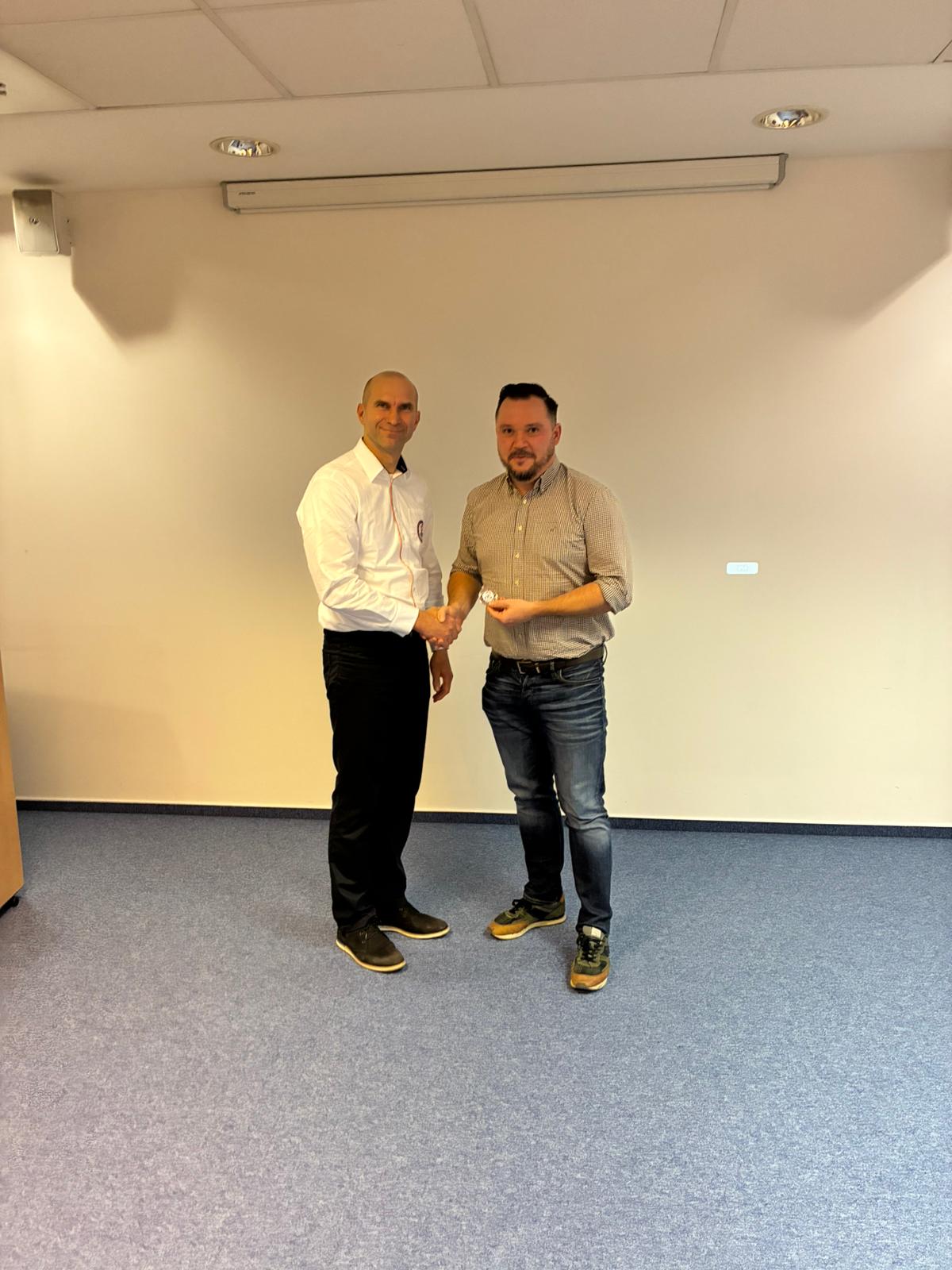
Chairman of the Working Group. He was congratulated by Martin Nekula, Czech Republic (Left) vice president of CTIF.
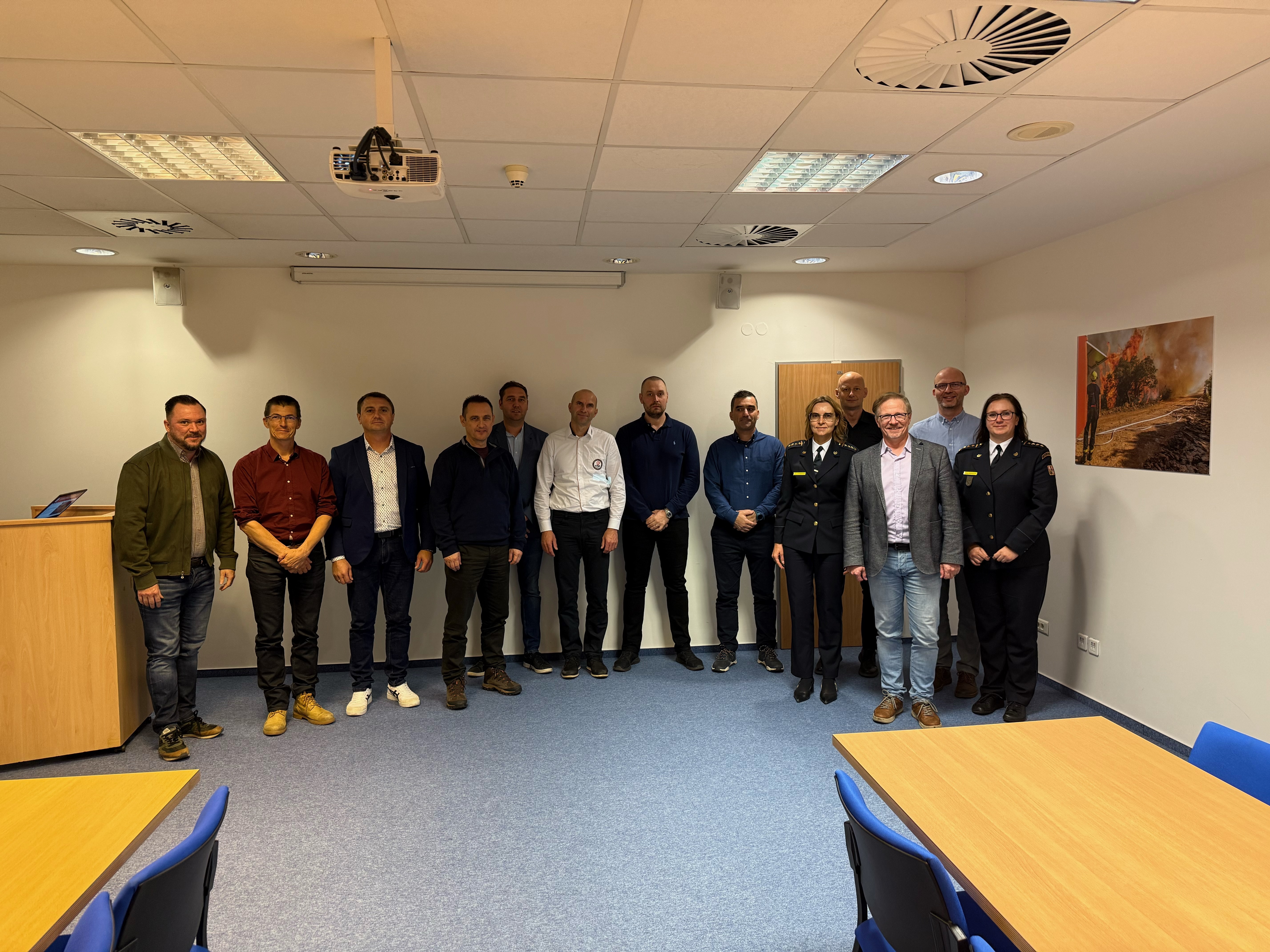
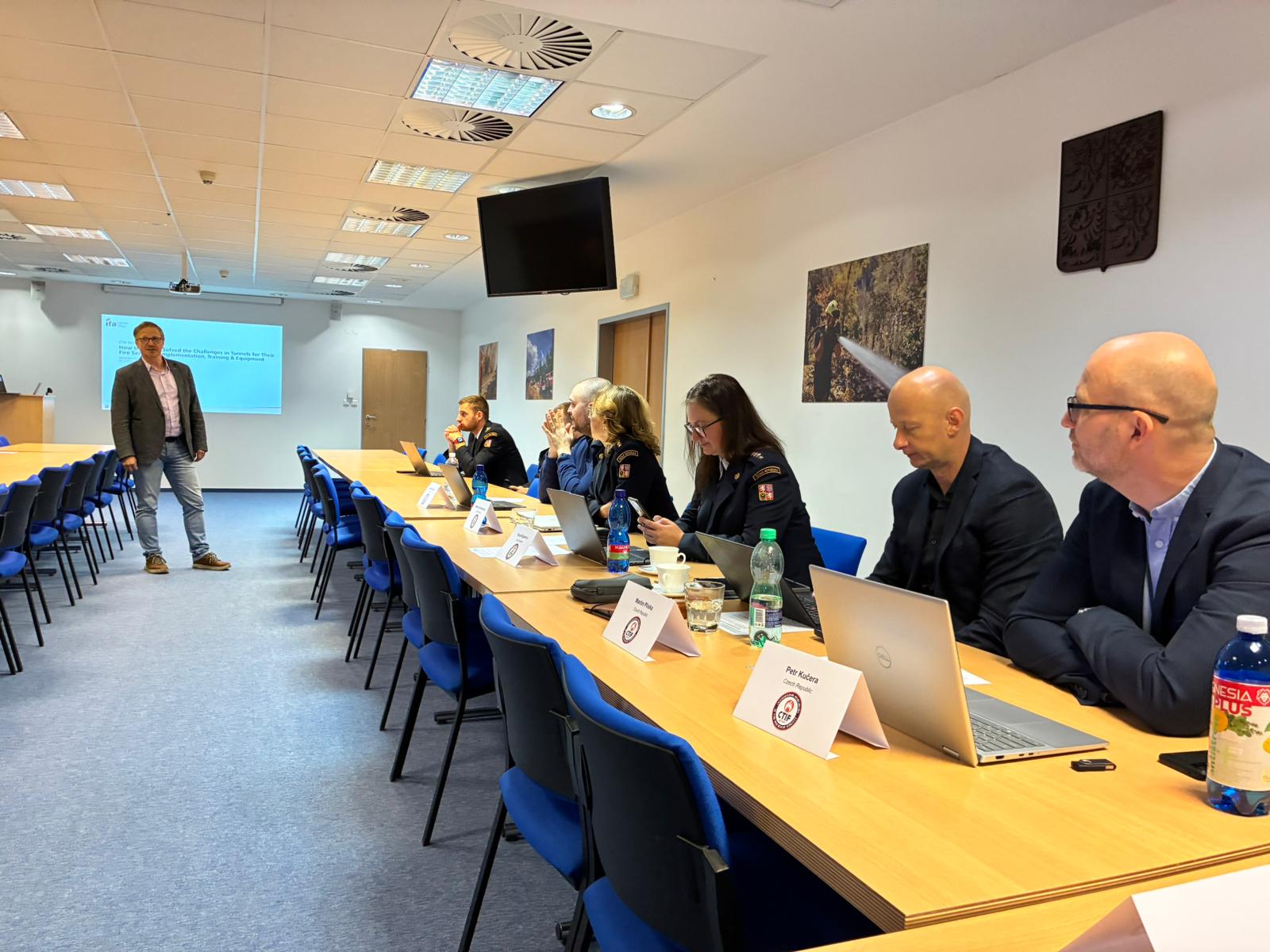
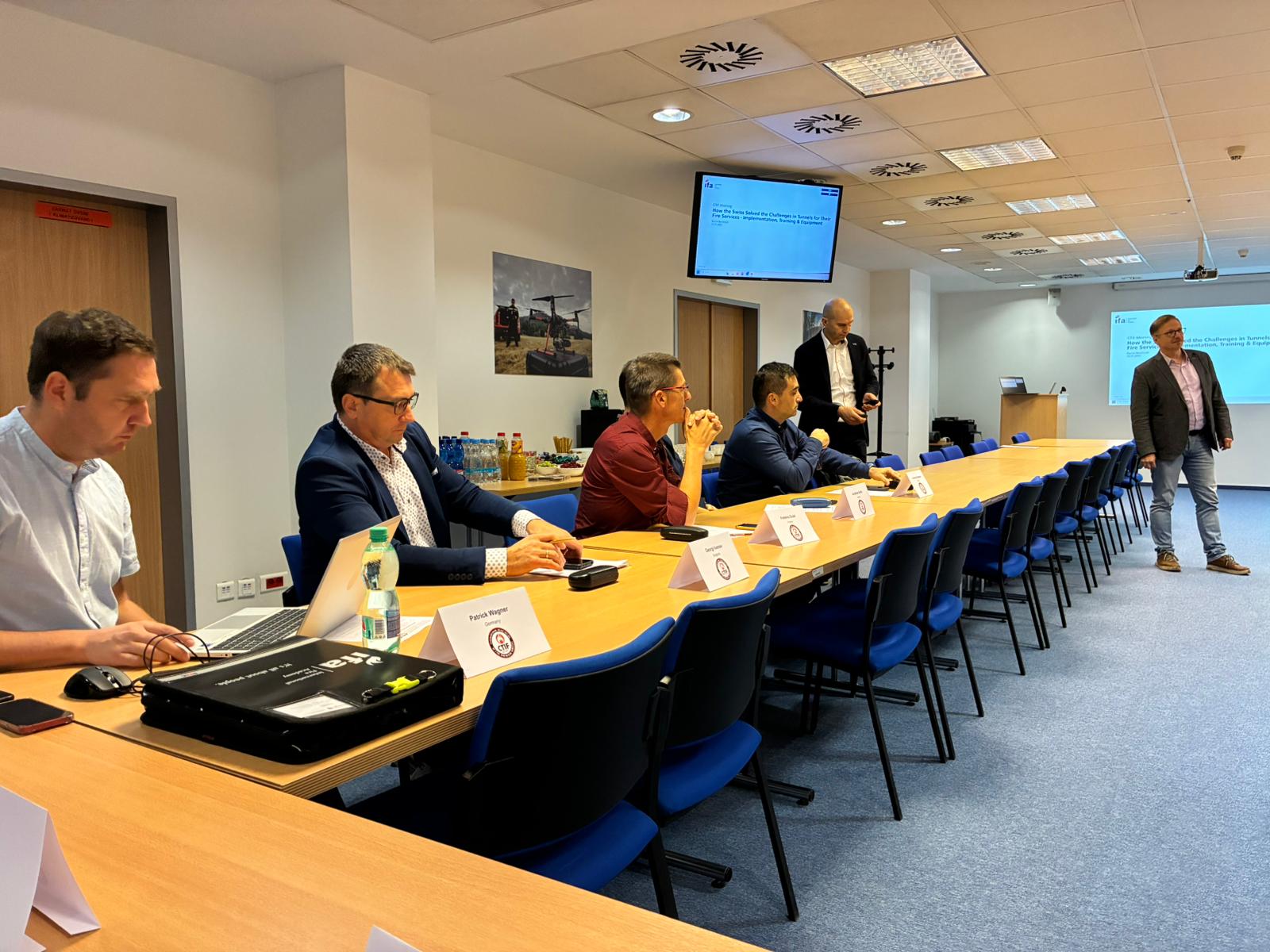
The Czech Republic hosted an international meeting of the CTIF Tunnel Fires Working Group from 12 to 14 November 2025 in Prague.
The event brought together tunnel safety experts and representatives from several European countries, including the Czech Republic, Austria, Switzerland, Greece, Finland, Germany, Bulgaria and France. The purpose of the meeting was to exchange knowledge, share best practices, and discuss developments in tunnel fire safety, emergency response, and operational tactics for underground infrastructure.
The meeting officially began after an informal dinner on Wednesday, 12 November, where participants had the opportunity to meet each other, strengthen professional relationships, and discuss expectations for the upcoming sessions in a friendly and open atmosphere.
Thursday, 13 November 2025
The official programme began at the Directorate General of the Fire Rescue Service (FRS) of the Czech Republic, where participants were welcomed by Martin Nekula, Vice-President of
CTIF, who officially opened the meeting.
The morning sessions continued with several expert presentations. Daniel Berchtold from Switzerland introduced the Swiss approach to addressing challenges in tunnel environments, focusing on implementation, specialized equipment and responder training.
Michael Halwachs from Austria provided an update on the ongoing work of the ÖBFV Working Group 4.4.
Presentations from Czech representatives followed: Petr Kučera gave an overview of fire and evacuation modelling in tunnels, and Andrea Lichtenbergová spoke about safety issues specific to railway tunnels. The morning concluded with an insightful overview of tunnel fire incidents and interoperability practices in Greece, delivered by Vasileos Katsiadas and Achilleas Saitis.
The afternoon programme continued with an online presentation by Martin Trčka from the Czech Republic on operational tactics for interventions in road tunnels based on fire parameters. This was followed by a comprehensive presentation by Frédéric Dutel from France, who described the French national tunnel database, methods of classifying underground infrastructure, and challenges faced by fire and rescue services during the construction of long and deep tunnels.
Insights into Helsinki’s extensive underground spaces and preparedness measures were presented by Joonatan Suosalo from Finland, and Patrick Wagner from Germany concluded the session with an overview of the tunnel system in Thuringia and the challenges associated with training for both road and railway tunnels.
The day concluded with an open discussion covering a number of key topics, including risk assessment and construction sites, ventilation strategies, operational procedures, and the development of training, tactics and educational materials.
 Best Practices and systematic sharing of Best Practices
Participants highlighted the importance of systematic sharing of best practices and the need to involve additional experts and organisations in the Working Group. The group also expressed interest in establishing a shared platform for exchanging documents, data, case studies and lessons learned regarding tunnels in Europe.
Plans for upcoming meetings were also discussed, including a future online session and an in-person meeting expected in November 2026, with potential hosts still to be confirmed.
During the meeting, participants proposed Michael Halwachs (Austria) for the role of Chairman of the Working Group, pending approval by the CTIF Executive Committee.
Friday, 14 November 2025
On the second day, participants took part in a guided technical visit to the Blanka Tunnel complex in Prague, led by Lukáš Rákosník from SATRA. The tour provided valuable insight into the tunnel's technological systems, safety design and operational concepts, linking the theoretical content of the previous day with practical real-world applications.
Following the visit, the group reconvened at the Directorate General to summarize the outcomes of the meeting and agree on the next steps. Among the key results, the Working Group confirmed that it had been formally restarted, and this would be communicated to the CTIF Executive Committee.
A cloud-based platform for sharing presentations and technical materials will be created. The group also agreed to define new goals for the coming period, with a focus on improving tunnel risk assessment, operational tactics, responder training and international cooperation.
Strengthening International Cooperation
The meeting in Prague successfully strengthened cooperation among tunnel safety specialists and emergency responders across Europe. Participants exchanged valuable experience, explored innovative tools and systems, and reaffirmed their commitment to improving tunnel fire safety, preparedness and response capabilities internationally.