

Se crearon ocho comunidades estratégicas de práctica al concluir el Congreso Mundial sobre Incendios 2026 en Londres
Gracias por elegir Automatic Translation. Actualmente ofrecemos traducciones del inglés al francés y al alemán, y próximamente añadiremos más idiomas de traducción. Tenga en cuenta que estas traducciones son generadas por un servicio de software de IA de terceros. Aunque hemos comprobado que las traducciones son correctas en su mayoría, puede que no sean perfectas en todos los casos. Para asegurarse de que la información que lee es correcta, consulte el artículo original en inglés. Si encuentra un error en una traducción que desea comunicarnos, nos sería de gran ayuda que nos lo hiciera saber. Podemos corregir cualquier texto o sección, una vez que tengamos conocimiento de ello. No dude en ponerse en contacto con nuestro webmaster para comunicarnos cualquier error de traducción.

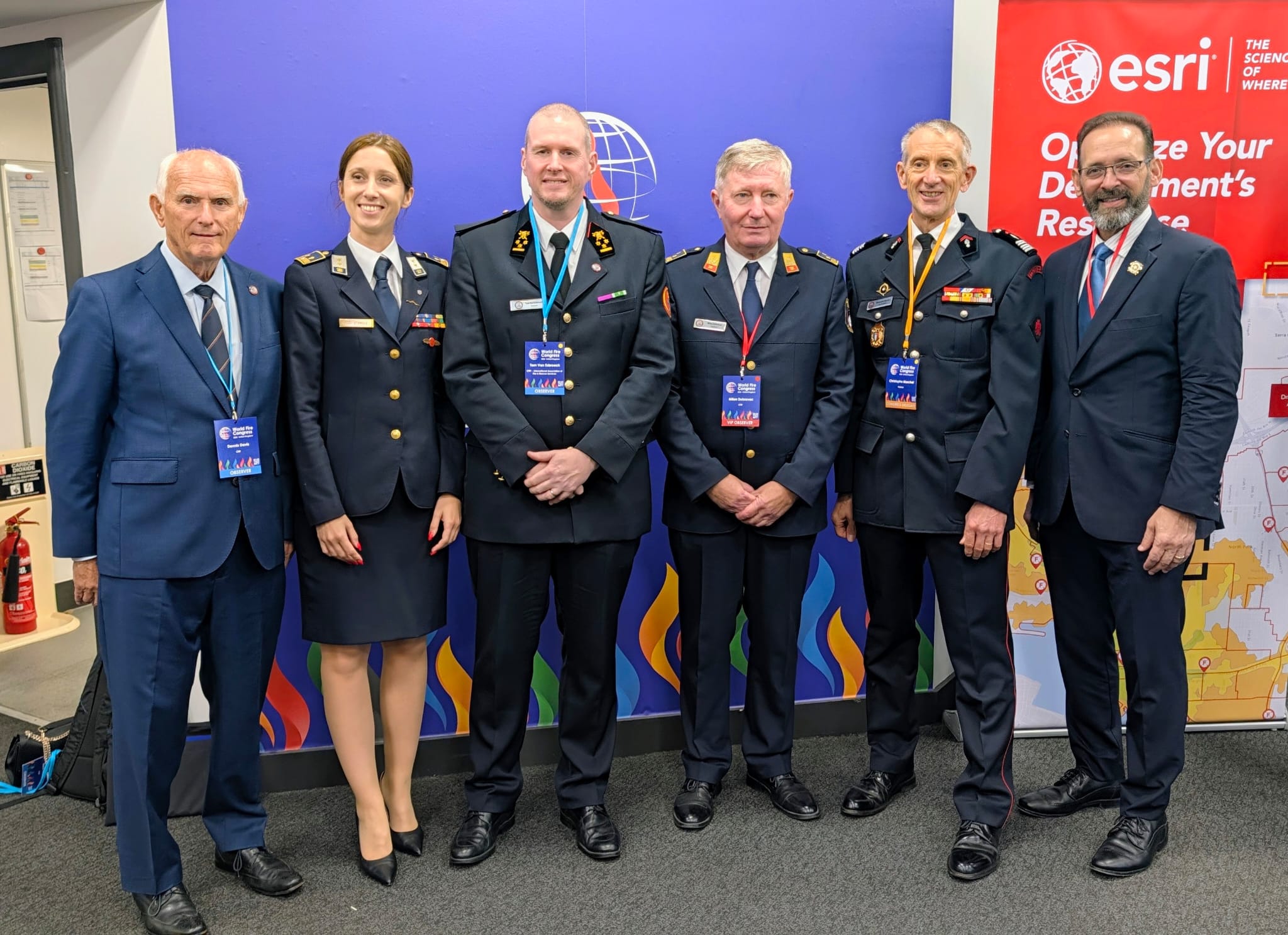
 El Congreso Mundial de Bomberos 2026 concluyó el miércoles 9 de septiembre en Londres, poniendo fin a un encuentro de dos días que reunió a responsables de los cuerpos de bomberos, investigadores, responsables políticos y organizaciones internacionales de más de 60 países.
Esta noticia está en desarrollo, y la CTIF publicará más fotos, informes y análisis sobre este evento en los próximos días y semanas.
El Congreso de 2026 reunió a una representación internacional excepcionalmente amplia, con delegados de más de 60 países. Los líderes hicieron hincapié en que el trabajo iniciado en Londres continuará a través de alianzas reforzadas, investigación compartida e iniciativas globales coordinadas,sentando así las bases para futuros congresos y esfuerzos de resiliencia a largo plazo.
El evento —organizado en el Centro de Conferencias QEII por el Consejo Nacional de Jefes de Bomberos del Reino Unido ( NFCC)— se centró en la cooperación global, los desastres provocados por el cambio climático, las tecnologías emergentes y la salud y seguridad de los bomberos.

La CTIF, miembro estratégico del WFC desde sus inicios
La CTIF estuvo representada en el Comité Directivo del Congreso Mundial de Bomberos, lo que reforzó el papel que la CTIF desempeña desde hace tiempo en la cooperación internacional entre los servicios de bomberos. Como miembro del Comité Directivo, la CTIF contribuyó al marco de coordinación internacional que guía el Congreso entre ciclos.
Este marco —respaldado por la NFPA, la IAFC y los Institutos de Investigación de UL— tiene como objetivo preservar el conocimiento institucional y fortalecer la colaboración global.
- Se refuerza la colaboración internacional: los delegados hicieron hincapié en la necesidad de compartir conocimientos y coordinar estrategias globales, a medida que los retos a los que se enfrentan los servicios de bomberos aumentan en escala y complejidad. El presidente de la NFCC, Phil Garrigan, destacó que «ningún país tiene por sí solo todas las respuestas», subrayando el papel del Congreso en el fomento de la resiliencia más allá de las fronteras.
- Se reafirmó el marco de la Secretaría: La Asociación Metropolitana de Jefes de Bomberos (Metro Chiefs) —una sección de la NFPA y la IAFC— continuó desempeñando su función como Secretaría del Congreso, garantizando la continuidad a largo plazo y el conocimiento institucional entre los ciclos del Congreso. Los Institutos de Investigación de UL apoyaron las iniciativas de investigación y aprendizaje.
- Enfoque en los riesgos emergentes y relacionados con el clima: Las sesiones abordaron los incendios forestales, los fenómenos meteorológicos extremos, los riesgos de las baterías de iones de litio, la protección de edificios patrimoniales y la preparación ante incidentes graves. Los delegados también escucharon directamente a las familias afectadas a través de la sesión «La voz de las comunidades».
- Participación global: Asistieron representantes de más de 60 países, lo que refleja el carácter cada vez más internacional de los retos a los que se enfrentan los servicios de bomberos, desde la urbanización y los riesgos de las infraestructuras hasta la preparación ante desastres.
Se crearon ocho «Comunidades de Práctica» estratégicas
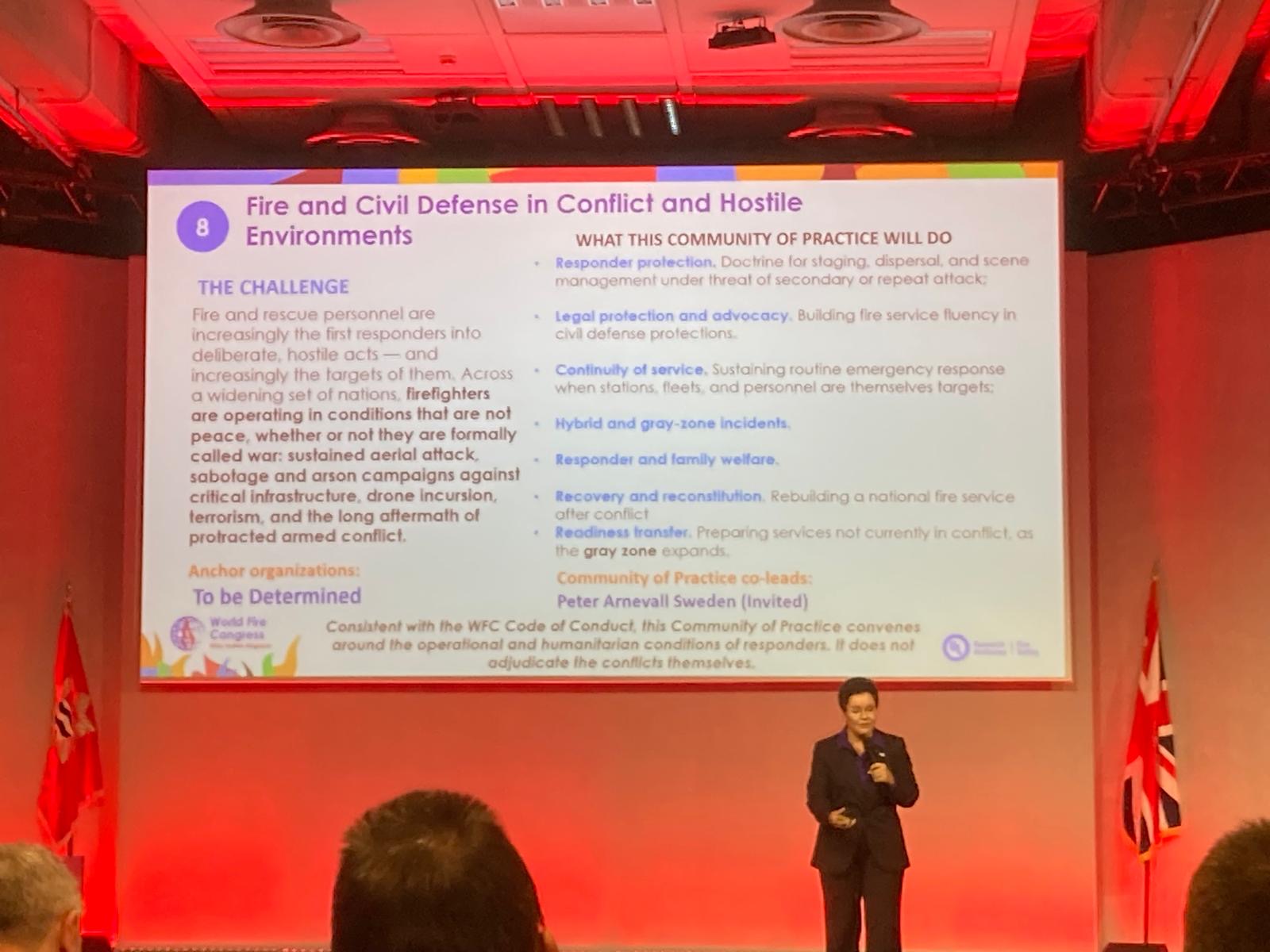
Uno de los resultados más significativos del Congreso fue la creación oficial de ocho «comunidades de práctica»(CoP) estratégicas. Estos grupos especializados están diseñados para aprovechar la experiencia mundial con el fin de abordar los retos más acuciantes a los que se enfrentan los servicios de bomberos modernos. Entre estas áreas críticas se incluyen el desarrollo de respuestas a los «sucesos a gran escala provocados por el clima», la integración de «tecnologías emergentes e inteligencia artificial», la utilización de «datos como base de unos servicios de bomberos basados en la evidencia» y la atención a las necesidades específicas de los incendios en «países de renta baja y media» (PRBM). Además, las CoPs se centraron en cuestiones fundamentales como la extinción de incendios: tácticas y formación, la salud y la seguridad de los bomberos, y el fomento del papel de las mujeres en el cuerpo de bomberos.
Incendios y defensa civil en entornos de conflicto y hostiles
Un debate fundamental se centró en el octavo reto recién definido: «Incendios y defensa civil en entornos de conflicto y hostiles». El Congreso reconoció que el personal de bomberos y rescate actúa cada vez más como primer equipo de respuesta ante actos hostiles deliberados y que, de forma alarmante, se está convirtiendo él mismo en blanco de estos ataques. Esta comunidad de práctica se enfrentará a la dura realidad de operar bajo ataques aéreos continuados, sabotajes, terrorismo e incursiones de drones, condiciones que existen independientemente de que haya una declaración formal de guerra. Entre los objetivos clave se incluyen el establecimiento de una doctrina para la protección de los servicios de emergencia frente a ataques secundarios, la garantía de protecciones legales en el marco de la defensa civil y la aseguración de la continuidad del servicio cuando las estaciones y las flotas se vean comprometidas. Este grupo, cuyo codirector propuesto es Peter Arnevall, de Suecia, también tiene la tarea de planificar la recuperación tras el conflicto y crear modelos de transferencia de preparación para países que actualmente no se encuentran en conflicto.
*CTIF.org profundizará en estas CoP en futuros artículos.
Dubái, la próxima sede
Según FireBuyer.com y otras fuentes, está previsto queDubái, en los Emiratos ÁrabesUnidos , acoja el Congreso en 2028, y se añade que actualmente se estánaceptando propuestasde posibles países anfitriones para 2030.

Breve historia: el primer WFC se celebró en 2024 en Washington, D.C.
El Congreso Mundial de Bomberos (WFC) se creó como un nuevo foro internacional para los servicios de bomberos y rescate, y su reunión inaugural se celebró en Washington, D.C., los días 7 y 8 de mayo de 2024. Organizado por el Gobierno de Estados Unidos, el primer Congreso reunió a representantes gubernamentales y profesionales de los servicios de bomberos de 54 países, con el objetivo de reforzar la cooperación internacional ante los retos cada vez más complejos a los que se enfrentan los servicios de bomberos y rescate en todo el mundo. El evento fue copresidido por la administradora de bomberos de EE. UU., la Dra. Lori Moore-Merrell , y Mark Hardingham, presidente del Consejo Nacional de Jefes de Bomberos del Reino Unido (NFCC). La delegación del Reino Unido también contó con la presencia de Sarah Gawley, directora de Incendios y Grandes Eventos del Ministerio del Interior, y del jefe de bomberos Roger Thomas, del Servicio de Bomberos y Rescate de Gales Central y Occidental.
El Congreso Mundial de Bomberos (WFC) se creó como un nuevo foro internacional para los servicios de bomberos y rescate, y su reunión inaugural se celebró en Washington, D.C., los días 7 y 8 de mayo de 2024. Organizado por el Gobierno de Estados Unidos, el primer Congreso reunió a representantes gubernamentales y profesionales de los servicios de bomberos de 54 países, con el objetivo de reforzar la cooperación internacional ante los retos cada vez más complejos a los que se enfrentan los servicios de bomberos y rescate en todo el mundo.
El evento de 2024 fue copresidido por la administradora de bomberos de EE. UU., la Dra. Lori Moore-Merrell , y Mark Hardingham, presidente del Consejo Nacional de Jefes de Bomberos del Reino Unido (NFCC). La delegación del Reino Unido también contó con la presencia de Sarah Gawley, directora de Incendios y Grandes Eventos del Ministerio del Interior, y del jefe de bomberos Roger Thomas, del Servicio de Bomberos y Rescate de Gales Central y Occidental.
Más información:
https://nfcc.org.uk/nfcc-brings-global-fire-leadership-to-the-uk-for-world-fire-congress-2026/?
https://nfcc.org.uk/first-ever-world-fire-congress-co-chaired-by-uk-held-in-washington-dc/
